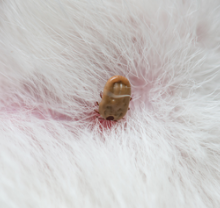
The Top 5 Reasons You Are Still Seeing Fleas

Fleas, fleas, fleas and how to treat them

Treating monthly and still seeing fleas? This might be why…

You’ve been doing the right thing by treating your pet with a preventative treatment on the correct schedule but hang on, you’ve just seen a flea. How has this happened? At VetBox we get this question often and we know it can be frustrating. Rest assured you are doing the right thing by treating your pet, but here are our top 5 most common reasons you may still be finding fleas on your pet and in your home. 

  1. You need to treat all pets in the home.

To successfully get rid of a flea infestation, ALL pets in the home need to be treated, not just the pet who seems to be affected. Some people may see fleas on multiple pets, but more often there is one primary offender who seems to be the flea favourite. This is why it’s vital that all your pets are treated with an appropriate flea treatment each month. 

  1. You need to treat them for long enough. 

It’s not uncommon for pet parents to be concerned when fleas aren’t gone IMMEDIATELY. It’s completely understandable as fleas are 1) unappealing and 2) irritating to you and your pets. That being said, consistent treatment is typically needed for three consecutive months to have the best chance beating a flea infestation. This has to do with the flea life cycle itself. Fleas are incredibly  persistent. They are fantastic at laying eggs that turn into larvae that are especially hard to get rid of. These live in your carpet, bedding, furniture, etc. and hatch into adults in the weeks to come. One female flea can lay 2,000 eggs in her lifetime. In moderate climates (not too hot and not often below freezing), our pets need to be treated with a preventative monthly all year round to break the flea cycle and keep them away. 
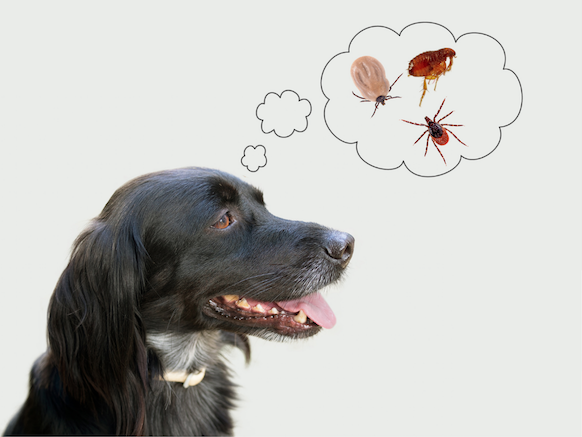
  1. You need to use an effective product. 

Not all products are right for every pet. For starters, it’s important that we as vets remind owners to ensure the product they are planning to use is made for either a dog or a cat. There are many products made for dogs that are very toxic to cats, so ensure you have the right product for the right species. Do not split a dose between pets, this will not provide the right amount of treatment to do its job. Some pets may do very well with one type of flea treatment whereas others may need a different product. Not all flea treatments contain the same drug and not all pets respond to every drug the same. You may be one of the fortunate ones that can use an over-the-counter treatment successfully, however some pets need a slightly stronger prescription treatment from their veterinarian. Unfortunately in our veterinary experience we have not found “natural products” to yield much success.

Important note: When using topical or spot-on treatments, you should not bathe your pet or let them swim within 5-7 days of application. These treatments rely on a normal intact fatty acid layer in the skin to be absorbed and spread. Bathing or swimming can disrupt this layer, or even just wash the product off before it is absorbed!

  1. You might have missed a month….or two…..ok nine…

The majority of flea treatments are created to be administered once every 4 weeks. Missing the due date by a few days here or there is typically ok, however if you miss a treatment for your pet and get to weeks 6, 7, or 8 on from the last treatment your pet is no longer protected. One tip is putting a reminder on your phone each month to give flea/wormer treatments so you don’t forget. VetBox subscriptions go one better because you get that friendly reminder from the team each month when your box arrives. Plus treats…bonus!

  1. You need to appropriately treat YOUR HOME!

This may be one of the biggest issues that we when people are having trouble with fleas at home. Owners get halfway there by diligently treating their pets, but forget an equally important part – cleaning their home itself. As mentioned above, flea eggs are produced by the hundreds and are fabulous at shedding off your pet into the house. These will mature into larvae that hide and become dormant in places like bedding, carpet, and furniture. Eventually if not also battled, they will become adults in weeks/months ready to start the life cycle again. We strongly encourage vacuuming all surfaces, washing bedding/blankets both human and pet, in hot water, and considering a safe environmental spray for carpeted areas and upholstery that will inhibit flea eggs and larvae. Often one round of deep cleaning is enough, but repeating these steps may be needed. A quick note, these sprays are made for your home NOT your pet! Keeping pets confined to an area where you have not sprayed while treated areas dry for a few hours is typically recommended. Following manufacturer guidelines and vet guidance is always best. 

A few final tips…

Virbac Animal Health make an effective and safe spray for your home that is widely available including on Amazon, called Indorex Spray. This is a product we often recommend to pet owners as an option in severe home infestations. *Reminder: Please follow product recommendations for application in your home. This is not a pet product!*

No one likes fleas and we want them off your pets and out of your home. Once again the best bet for success is responsible and regular monthly preventative treatments to keep us all happy and flea free. 

Dr. Kirsten Ronngren, DVM – MRCVS

Vet at VetBox

Get your VetBox subscription and start beating fleas today.

Ticks 101 and how to treat them

Peaches and Pebbles, two lovely cats with a VetBox subscription

A crash course for pet owners all about ticks

Just like their flea counterparts, ticks are a parasite that are not only excellent at making us all cringe, but also at carrying and spreading diseases. These diseases are not only able to infect your pet, they can also infect us! Ticks are commonly referred to as vectors. Vectors are creatures that are required for the life cycle and spread of an infectious disease. In this post we go into the details and tips that pet owners should know about ticks and their presence in the UK.

The different kinds of ticks

Ticks come in many shapes and sizes, and there are multiple species known to bite in order to transfer infectious diseases. There are four stages of the tick life cycle: egg, larvae, nymph and adult. People are typically familiar with enlarged adult ticks, meaning the ones that have latched onto their pet (or themselves) and taken a ‘blood meal’. You may also see adults that have yet to take a blood meal, otherwise know as a nymph tick (immature adult). Ticks do not typically “jump” like we see fleas do, rather they hover on grass or brush and wait for you or your pet to pass by so they can latch on. They don’t always attach immediately, which is helpful as it gives  us more time to be able to remove them prior to biting. Areas of your pet commonly affected are the face, ears, armpits (axilla), groin (inguinal), and in between the toes (interdigital space). These spots have thinner skin and less hair, meaning easier access and attachment for the tick. That being said, you can still find a tick anywhere. 


Ticks can cause Lyme disease

Once a tick has attached itself to you or your pet, it can take variable amounts of time to spread infectious diseases depending on the disease type. One of the most common tick borne diseases that pet owners and the public are familiar with is Lyme disease. Lyme disease is caused by the bacteria Borrelia burgdorferi and spread by the Ixodes tick. This can cause potentially severe clinical signs in both pets and humans including fever, joint pain and swelling, lymph node swelling, and lethargy. Lyme disease can be managed/treated, however does have potential for chronic problems. 

Borrelia isn’t the only offender in this category, here are a few other tick borne diseases that are present and/or have the potential to emerge in the UK:

  • Babesia spp. – Infects red blood cells and can cause anemia, spread by the brown dog tick (Rhipicephalus sanguineus)
  • Ehrlichia spp. – Can cause low blood cell counts and kidney problems, spread by the brown dog tick 
  • Anaplasma spp. – Similar to Ehrlichia
  • Rickettsial spp. – The agent causing Rocky Mountain Spotted Fever in humans/pets
  • Acanthocheilonema (dipetalonema) spp.
  • Flavivirus 
  • Francisella spp. – The agent known to cause tularemia
  • Coxiella spp. – The agent responsible for Q fever
  • Hepatozoon and Cytauxzoon spp.

Essential tick prevention treatments

Tick borne diseases have the potential to elicit serious consequences for both pets and their humans. Because of this, vets strongly encourage tick prevention in animals that spend time outdoors. Ticks love areas with high grass, brush, heavily wooded areas, bushes, etc. as this allows for easy access to attach to passersby. Animals that spend significant amounts of time on walking paths, hiking, and in areas like those mentioned above are at higher risk. Indoor only cats and dogs that spend most of their time inside are at lower risk. Ticks prefer warmer more moderate weather like fleas, so spring and summer are times of year that pets are at higher risk. Areas that experience a consistent freeze in the winter months do typically get a break from tick activity, but those that experience moderate weather consistently like the UK should mean  monthly tick prevention year round.

Top tips to keep you and your pet free of ticks: 

  • Use monthly tick prevention, such as the one VetBox provides
  • If in any doubt, speak with a vet to determine your risk level, and what preventatives are best for your pet VetBox subscribers get free access to veterinary support
  • Keep tabs on tick distribution in your area. Maps are available through the ESCCAP website as well as here
  • Check yourself and your pets when you come back from activity in at-risk outdoor areas 
  • If you find a tick on your pet, ask your vet about removal and if testing is needed for infectious diseases

Ready to tick ticks off your list? VetBox subscriptions include monthly tick treatments as standard. Get started now.

Dr. Kirsten Ronngren, DVM – MRCVS

Keeping Your Pet (and You) Free of Worms

Keep your pets worm free with your VetBox subscription

Common Gastrointestinal Parasites of Dogs and Cats

It’s probably safe to say that every pet owner wants their pet to be worm free. When I say worms, I’m talking about gastrointestinal (GI) parasites. Those pesky worms that we think only puppies and kittens get can actually infect pets of all ages. There are several types of parasites that infect our furry family members, but in this post we’re going to focus on a few common GI parasites you should be aware of as a pet owner. 

Roundworms 

Among our friends in the GI parasite family, roundworms are extremely common among dogs and cats. They are one of the most widely recognised, resembling spaghetti on their best days. Species causing infection are usually Toxocara, though others exist in the environment as well. But where do these parasites come from? Transmission between pets is typically faecal-oral, meaning your dog/cat gets faecal material from an infected animal in their mouth and swallows the eggs. You may think, “well my dog doesn’t eat other dogs’ poo” and that may be true. We have to remember that contact with faeces can be in many forms such as sniffing another animal’s rear end in the park, or even just stepping in soil that had faeces in it and then your dog licks its paws to clean them. The egg grows into an adult worm along the gut and then sheds eggs to be passed out in your pets faeces. Not very nice! Now let’s think about the sheer number of eggs that are passed. We’re talking thousands of parasite eggs from one adult worm, with the worst part being these eggs are microscopic. You won’t be able to see these with the naked eye. Not all pets will pass adult worms into the faeces, meaning that your pet could be infected and you may not even realise. This can end up being a problem for your pet, you and your family (we’ll talk more about this in our “Zoonosis” blog), and other pets that could become infected. Puppies and kittens can also be infected directly in the uterus from their mother, making roundworms in our young babies common and important to address. In addition to the roundworm issue being disgusting, it can cause medical issues for your pet including diarrhoea, vomiting, weight loss, and potentially even intestinal blockage in severe cases. Roundworms are found far and wide including places like the park, the beach, walking paths; anywhere that dogs might poo. It is important we recognise this is a risk and make sure we are deworming our pets regularly with the direction of a licensed vet.

Hookworms

Similar to roundworms, hookworms are also in the same family, however they contain a hook like mouth on the adult worm that allows them to behave a little more aggressively. Hookworms are also spread via the faecal-oral route. Signs of infection may include diarrhea, but in severe cases we may also see blood in the stool or anemia (low red blood cell count) due to bleeding in the intestinal tract from the parasite. Both hookworms and roundworms may also try to migrate  to other organs and cause serious disease. Hookworms in particular are known to cause conditions in humans called visceral larval migrans (migration and trauma to other organs) and cutaneous larval migrans (migration to worms under the skin). This makes deworming your pet even more essential for you both.

Tapeworms

There are thousands of parasites that can infect our pets, but I think one that people recognise above others are tapeworms. Tapeworms are commonly spotted by owners with or without clinical signs like diarrhea. Vets get many calls about “small worms coming out of the patient’s behind”. These little worms resemble moving grains of rice, and are the major indicator of tapeworm infestation. The most common origin of tapeworm infestation is actually a flea infestation. Fleas harbour the immature form of the tapeworm Dipyllidium, and when pets groom/lick themselves and swallow adult fleas, they also consume the tapeworm egg. The worm then matures in the gut and both segments of the adult worm as well as eggs are passed in the faeces. There are other common species of tapeworms, primarily of the Taenia family, that our pets contract by consuming what is called the intermediate host. This is a host that helps the parasite complete its life cycle and mature, such as a rabbit or rodent. 

Some other common gastrointestinal parasites include coccidia, giardia, whipworms, and lungworms (these are actively passed through faeces even though they reside in the lung). I could write pages and pages on these, however I think that it’s important pet owners are familiar with some of the most common to help them be proactive when it comes to prevention. Prevention is always better than treatment if we can help it.

Top Five Parasite Tips for Pet Owners

  1. Make sure a vet is involved in deciding which wormer is best for your pet.
  2. There is not ONE dewormer that treats ALL parasites, meaning there is not a one shot treatment for all species. This makes #1 all the more important. 
  3. Most intestinal parasites are NOT visible to the naked eye and may or may NOT cause clinical signs like diarrhea. It is important that we regularly deworm our pets AND regularly have a faecal sample checked by a vet to make sure we aren’t missing low grade infections. 
  4. Prevention is typically cheaper and safer than treatment after a problem is detected. 
  5. HUMANS can also become infected and ill from parasites that infect our pets, making awareness and treatment essential to all of our health. 

Dr. Kirsten Ronngren, DVM – MRCVS

Want to get started on your worm free journey? Get your first VetBox subscription today.

How COVID Has Impacted Our Dogs and Cats

Pets during the pandemic and how we can care for them

The rise of the Pandemic Pet

It goes without saying that COVID has impacted the world beyond everyone’s expectations. However our pets are a group that have been easy to forget and the pandemic has had a big impact on them too. While our daily routines and activities have been shuffled, so have theirs. In this post we take a look at some considerations for our furry family members during this pandemic from a vet’s perspective.


You’re spending a lot more time at home, isn’t that good?

This is great in many scenarios, it means your pet gets more time with you! At VetBox many of our pets have been thrilled to have us at home more. It means we’ve been playing a lot more fetch and going for many more walks. Some of us are getting a lot more exercise, which includes our pets! While this can be a good thing, it’s important to realise that this can also have some less desirable effects.

We may see more cases of separation anxiety

Pets, particularly dogs, that have gotten used to their humans being home all day have been showing increased signs of anxiety when the owners do have to leave the house. Having a plan for re-adjusting your dog to alone time once your schedule starts to change again will be an important planning tip for pet parents as 2021 progresses. Gradual transitions in routine are best to decrease anxiety. Ensuring they have had appropriate attention and exercise prior to leaving the house is helpful. Doing your best to maintain some of the good habits you have developed while being home more will make it an easier transition for your pup!

Cats love you, but might not be thrilled you’re around so much

Some cats have been happy to have their humans around more, with some enjoying a warm body to cuddle. It’s important to remember however that cats are creatures that are VERY easily stressed. Even the smallest changes in routine can cause significant anxiety.


You may not realise your cat is stressed, as they mask this well and often display behaviours owners don’t associate with stress. More obvious behaviours may be urinating outside the litter tray or outward displays of displeasure (scratching or biting), but things as simple as hiding more, avoiding you, decreased food consumption, or increased altercations with housemates can be a sign of stress.

Being sure to provide enrichment and stress relief for cats is just as important as dogs, so here are our top tips:

  • Puzzle feeders allow cats to harness their inner hunter and work for their food.
  • Automated toys can provide entertainment to your kitty if you are swamped with work or home school.
  • Make sure you cats have a “safe space” where they can be alone and feel safe (i.e. a gated off room, an area with a bed and scratching post, etc.) so they have a quiet place to decompress.
  • Using anti-anxiety nutraceuticals may benefit your cat. We’re fans of the pheromone spray “Feliway” which neutralises scents that cause stress to cats. This comes in a spray, a plug-in diffuser, or a wipe and is safe to use anywhere. Feliway can be purchased online at retailers like Amazon

People are bringing home new puppies and kittens in high numbers

Many homes are adopting new pets because they have more time to care for them during the pandemic. This is fantastic as rescues/shelters have been able to take in and adopt out more animals, but also means that vet clinics have seen another upswing in appointments.

Due to vet clinics  incredibly busy during COVID, it can be challenging to get non-emergency appointments. This has improved with time, but still remains a challenge. Veterinary professionals are doing their best to accommodate everyone but it can cause frustration.

Levels of infectious disease are a concern

Many areas have seen outbreaks of infectious diseases such as distemper virus and parvovirus because people bringing home new puppies are not taking  them for vaccination boosters at the right time (or at all). This may be because people are finding it harder to get  a vet appointment, people are being encouraged to stay home for lockdowns and because people are not informed as to the repercussions of missing these crucial juvenile vaccinations. 

A lack of vaccinations  also means pandemic puppies are at risk of inappropriate socialisation. For more information on socialisation and behaviour, our Puppies series iscoming soon

The pandemic has given us a great chance to spend lots more time with our pets. It’s essential to remember we need to help them adjust as we do too, so we all can get through these strange times together.

VetBox top tip: Be sure to get your puppy and kitten their booster vaccinations and parasite preventatives on time to avoid serious diseases. Plan ahead when considering timing of appointments to give yourself, your pet, and your vet the best chances to work out a plan. To tick one thing off the list, VetBox delivers a monthly box of parasite treatments tailored to your pet. Get started now.

Dr. Kirsten Ronngren, DVM MRCVS

Vet at VetBox