

If your pet has been scratching more than usual lately, you’re not imagining it. Late winter is a common time for itchy behaviour to ramp up, and while dry skin can definitely play a part, it’s not always the full story.
Here’s what could be behind the extra scratching, licking and nibbling, and how to tell when it’s time to look a little closer.

Dry winter air
Cold weather and central heating can dry out your pet’s skin, just like it does to ours. This often shows up as mild itchiness, flaky skin or extra grooming, especially around the legs, belly and sides.
For many pets, this kind of dryness is temporary and improves with time, good nutrition and regular grooming.
Less grooming means more irritation
During winter, coats tend to get thicker and grooming routines often slip. Matted fur, trapped dirt and loose hair can all irritate the skin and make itching worse.
Regular brushing helps improve airflow to the skin and lets you spot any changes early, whether that’s redness, scabs or something more concerning.
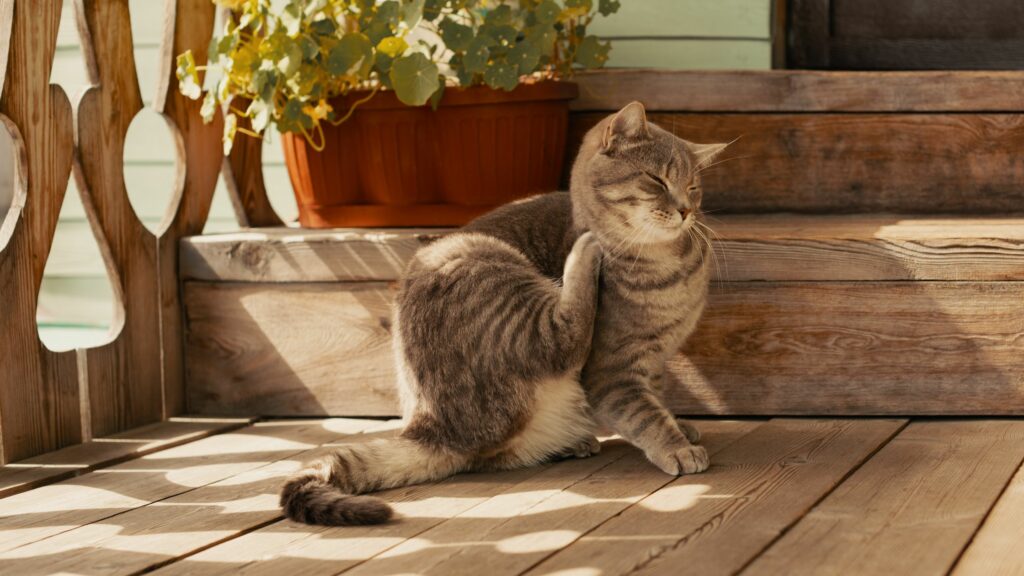
Fleas love cosy homes
It’s easy to assume fleas disappear in winter, but they don’t. Central heating creates the perfect environment for fleas to survive and reproduce indoors. Even pets that spend most of their time inside can still be at risk.
If your pet is scratching intensely, biting at their skin or focusing on one area, fleas could be the cause even if you can’t see them straight away.
Ticks do not fully disappear either
Ticks are less active in very cold weather, but during mild winter spells they can still be present, especially in grassy, wooded or rural areas. Dogs that enjoy muddy walks and cats that roam outdoors can still pick them up.
Checking your pet after walks or outdoor time is a good habit to keep year round.

When itching is a sign to act
Occasional scratching is normal. Constant itching is not. You should look closer if you notice:
- Persistent scratching, chewing or licking
- Hair loss or thinning patches
- Red, sore or broken skin
- Changes in behaviour or restlessness
These signs can point to parasites, allergies or skin infections, all of which benefit from early treatment.
Staying one step ahead
The best way to reduce parasite related itching is to stay consistent with flea, tick and worm treatments throughout the year. Skipping doses in winter can give parasites the chance to take hold, leading to bigger problems later on.
Regular grooming, clean bedding and keeping your pet’s routine steady all help too.
The bottom line
Winter dryness can make pets itchy, but it is not the only cause. If the scratching feels excessive, sudden or relentless, it’s worth checking whether parasites could be involved.
Staying observant now can save your pet a lot of discomfort later, and save you a much bigger headache once spring arrives.
